
- Crop farming
- Seed potato
- Season 2026
Seed potato harvest in a waterlogged season
A season of abnormal rainfall: fields became waterlogged and part of the harvest rotted. We tested whether the fertiliser would save the harvest with half the crop protection rate.
- yield vs control
- ×2.5
- 50–55 t/ha vs 20–22 t/ha
- crop protection rate
- −50%
- in a tank mix with the fertiliser
- trial area
- 80 ha
- two fields: 20 and 60 ha
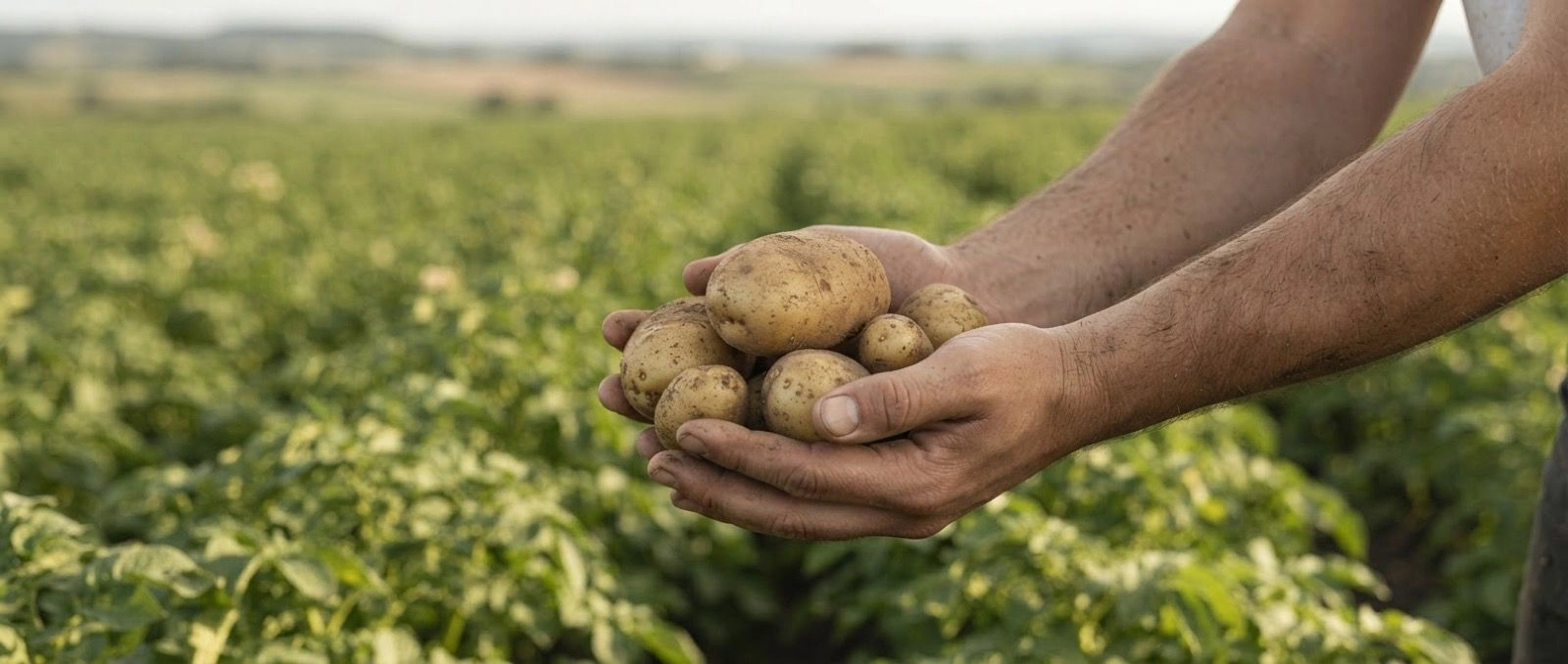
Trial passport
The conditions under which the result was obtained. The full report is in the documents below.
- Crop
- Seed potato: Colombo (elite) and BP 808 (super-elite)
- Area
- 80 ha — two production fields, 20 and 60 ha
- Region
- Sverdlovsk Oblast
- Farm
- Seed-growing farm
- Season
- 2026 · final harvest count — 18 August
- Control
- Standard technology, full crop protection rate
- Trial
- Half crop protection rate + BASK fertiliser in a tank mix
- Conducted by
- The farm's agronomist together with a BASK agrobiotechnologist
- Document
- Field trial report
The task and the season's conditions
The farm wanted to save its harvest in a difficult season and check whether the crop protection rate could be halved without losses.

Abnormal rainfall
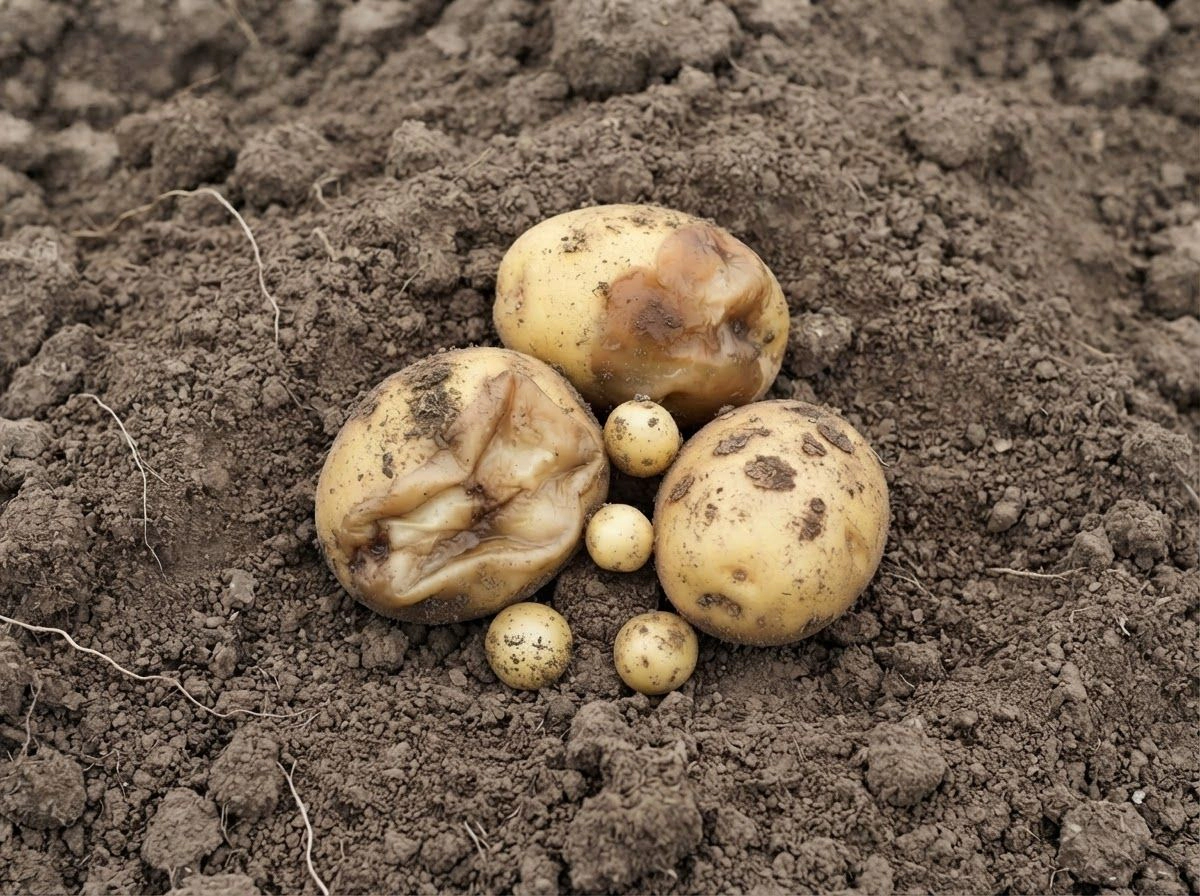
Fields became waterlogged and tubers rotted. Yield losses across the farm reached 70%.

Herbicide stress and frosts
Heavy chemical protection and late frosts stop potato growth for 10–14 days.

Machinery could not enter the field
Because of waterlogging, only one in-season treatment was done instead of two.
How the trial was run
Fertilised and control plots were in the same fields under the same technology. Only the protection and nutrition scheme differed.
Control
- The farm's standard technology
- Full crop protection rate — 100%
- No BASK fertiliser
Trial
- Tubers treated with the fertiliser at planting
- Half crop protection rate — 50%
- BASK fertiliser in a tank mix during the season
- At planting01
Planting
Tubers were treated with the fertiliser together with the seed dressing.
- Budding02
Growing season
Spraying in a tank mix with 50% crop protection. Because of rain, one treatment instead of two.
- 24 July03
Interim count
Number and condition of tubers in samples from trial and control plots.
- 18 August04
Final count
Yield per hectare on trial and control plots.
Results
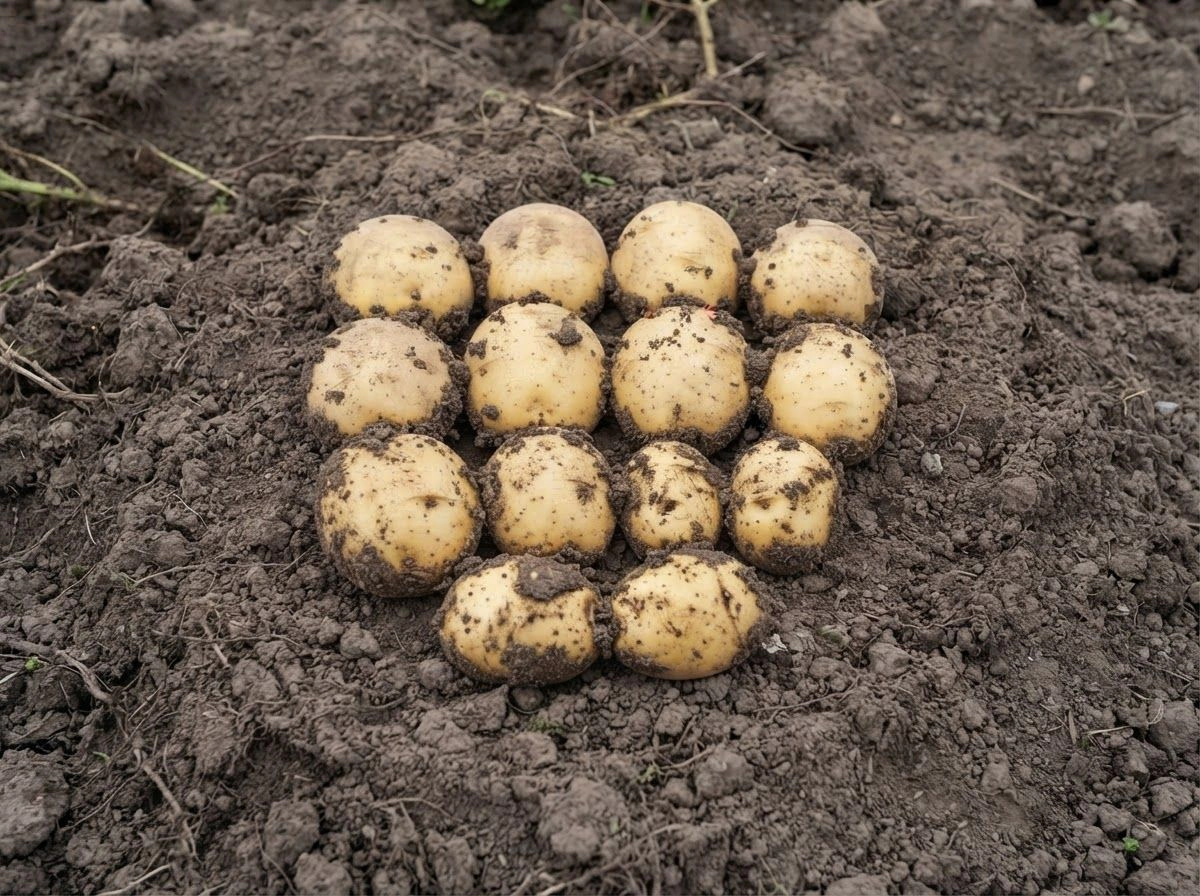
Interim count on 24 July and final count on 18 August. Compared with control plots in the same fields.
Yield, t/ha
×2.5Control20–22With BASK50–55Tubers per plant
×2.2Control5.5–6.7With BASK12–15Plant height, cm
+40%Control55–60With BASK77–83Standard tubers per sample
+47%Control30With BASK44
Why it worked
The fertiliser worked both in the soil and in the plant — this helped the crop survive waterlogging and the chemical load.
- 01
Nutrients don't wash out
Humic acids hold nitrogen, phosphorus and potassium in the stolon zone — rain does not carry the fertiliser away.
- 02
Phosphorus became more available
Bound phosphorus turned into an available form — roots started faster and more tubers were set.
- 03
No herbicide stall
Fulvic acids relieve chemical stress — the plant keeps growing after treatments.
- 04
The soil “breathes”
Aeration and drainage of excess moisture improved, and soil microbial activity increased.
Conclusions
Yield 2.5 times higher than the control despite waterlogging and rot
The crop protection rate was halved without losing protection efficiency
Plants formed twice as many tubers and kept growing after treatments
Recommended for use in a scheme with 50% crop protection
The result was obtained under the specific conditions of the 2026 season and depends on the crop, variety, soil and weather. We select a scheme for your farm separately.
Other cases
All cases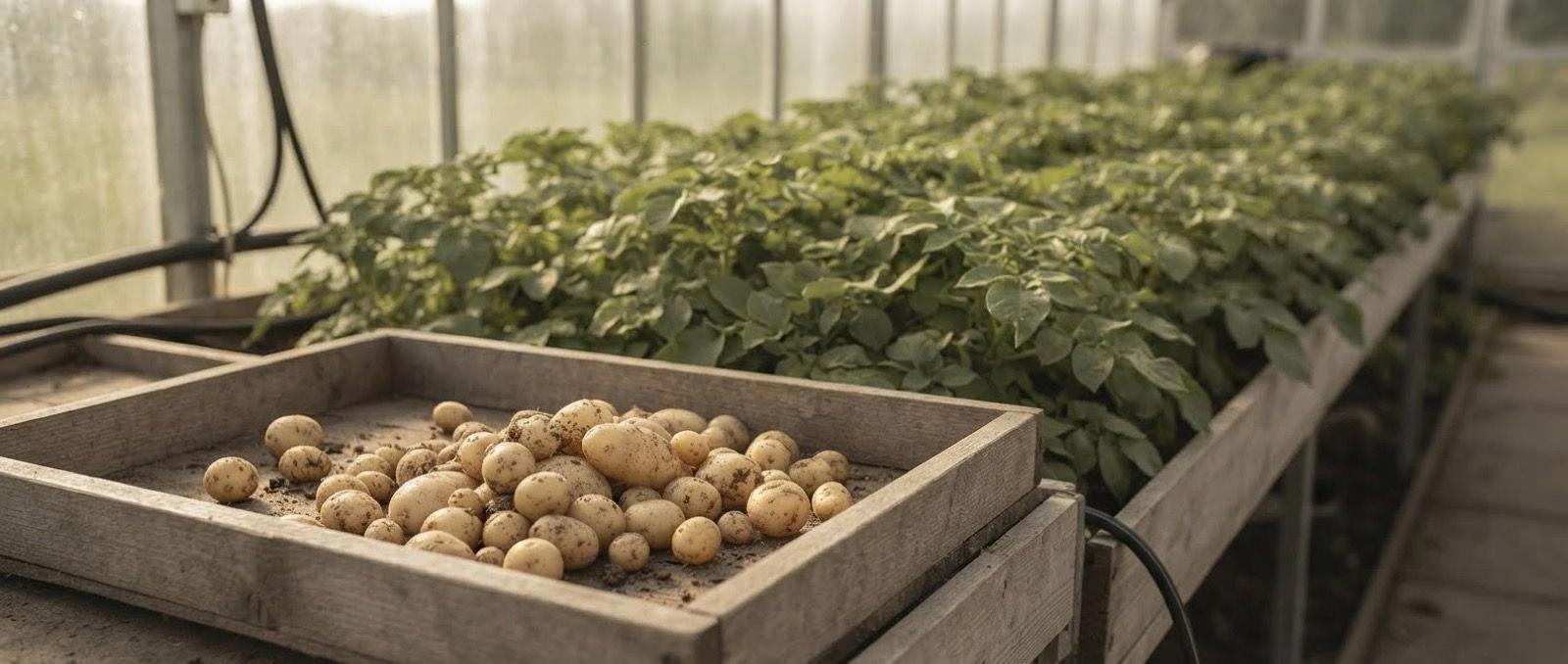
Let's test the result on your farm
We apply the solution to part of a field, herd or waste volume and compare it with a control. You decide on adoption after the result.
- 01
We discuss the task
We choose the indicators we will compare.
- 02
We set up the trial
A specialist visits you and sets aside trial and control groups — in the field, on the farm or at the site.
- 03
We take measurements
We record the indicators throughout the season or cycle.
- 04
We sum up
We hand over a report and an application scheme for your farm.
What you get
Results in your conditions
On your field, herd or site
A report compared with the control
Figures you can show to management
An application scheme for your farm
Rates, method and frequency of application
Or call us: +7 (343) 287-99-97 · we will agree on terms and timing on the first call