
- Crop farming
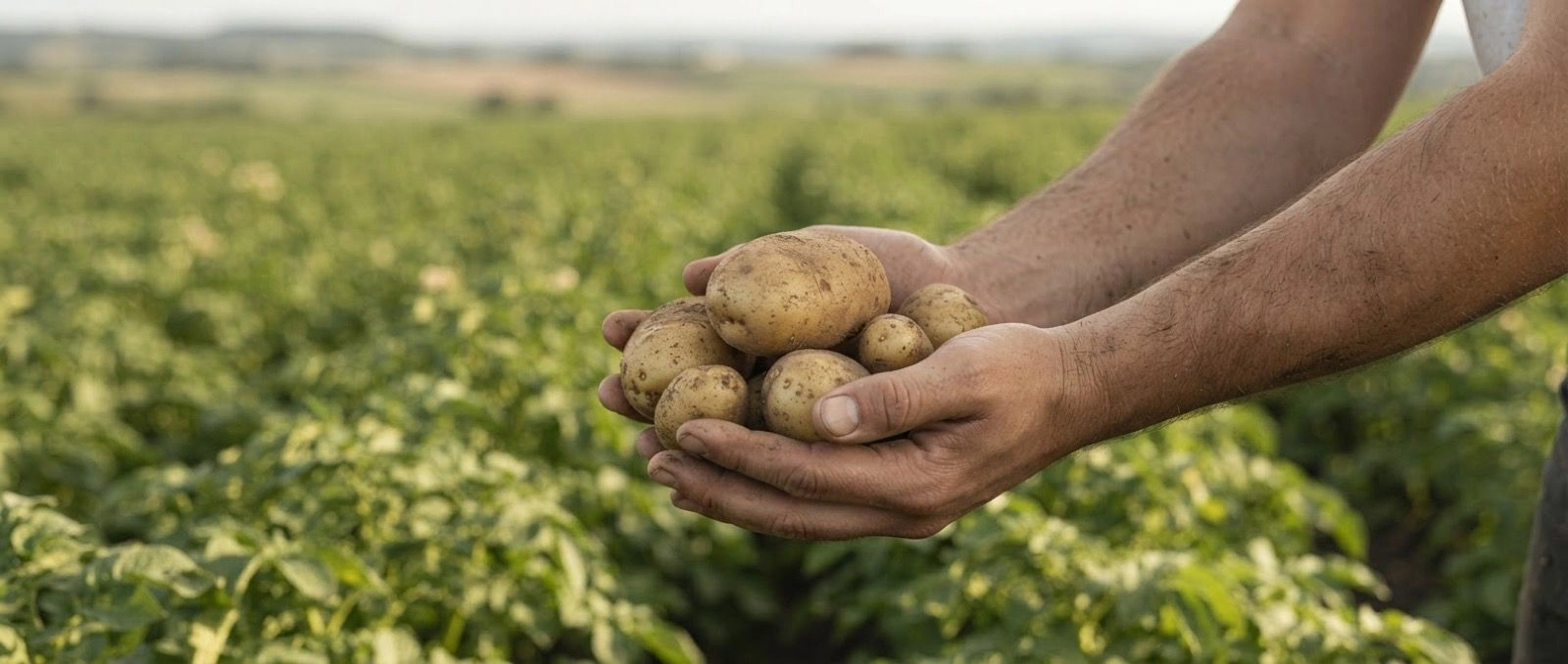
- Potato mini-tubers
- April–June 2026
Mini-tubers: a heavier harvest, more standard tubers
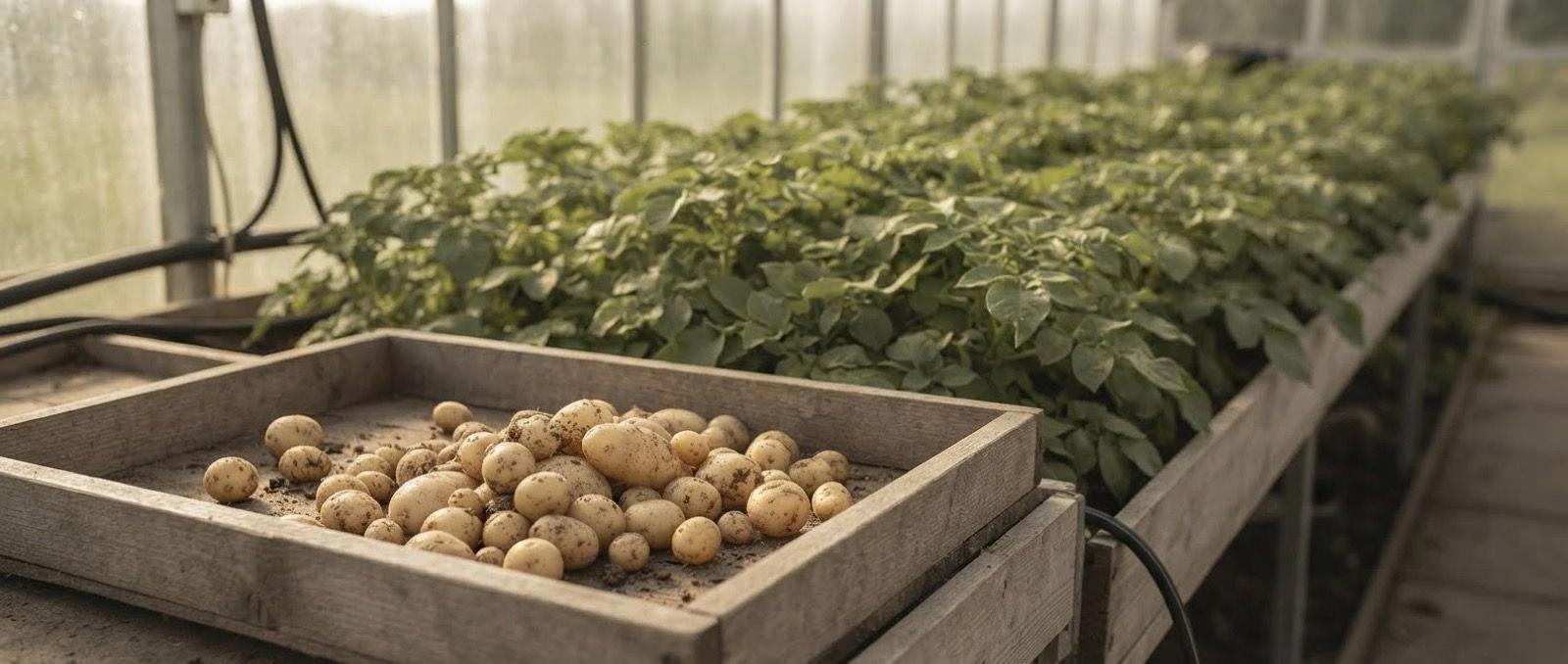
A trial in a film greenhouse of a seed farm: we compared BASK fertiliser with the control and other biologicals on VR 808 microplants.
- harvest weight
- +11%
- 45.1 kg vs 40.7 kg in the control
- standard tubers
- 79%
- vs 66% in the control
- trial variants
- 5
- control, BASK and other biologicals
Trial passport
The conditions under which the result was obtained. The full report is in the documents below.
- Crop
- Potato, VR 808 variety: microplants → mini-tubers
- Conditions
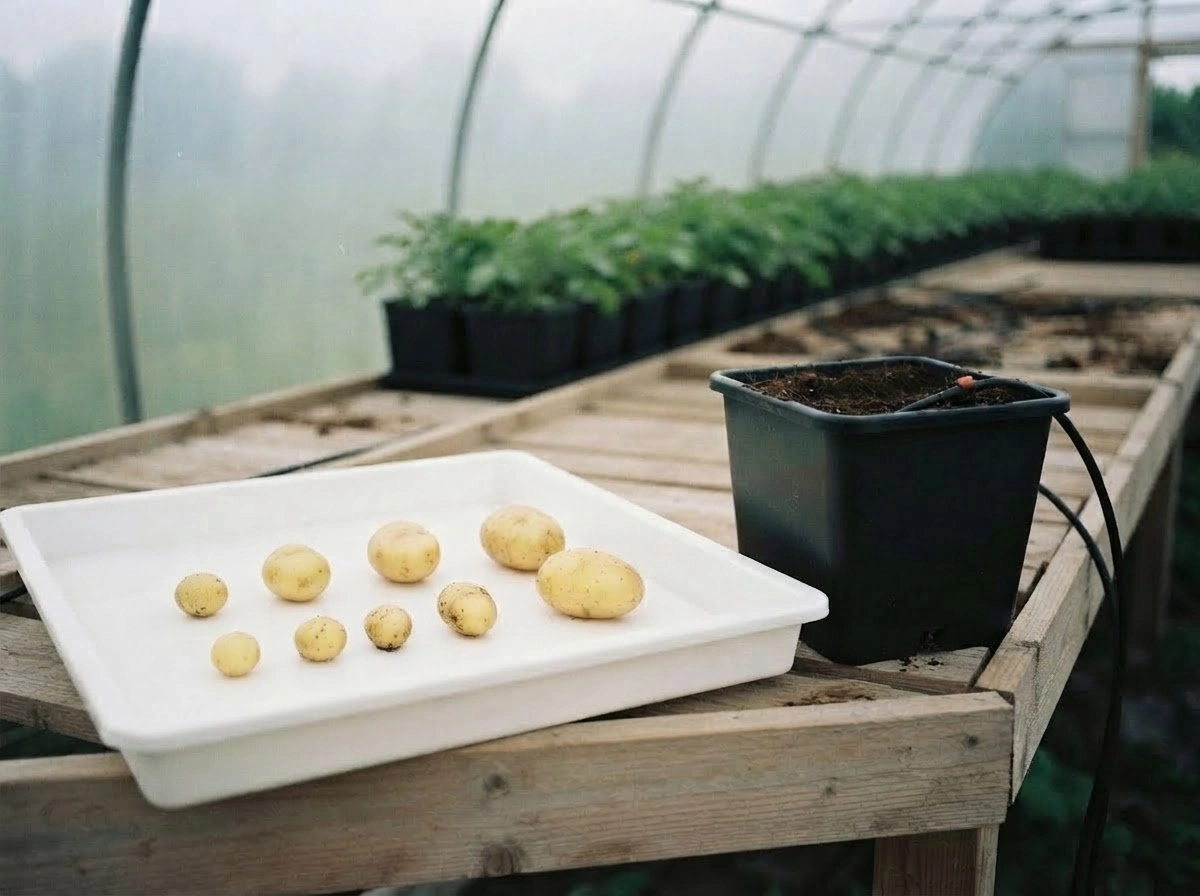
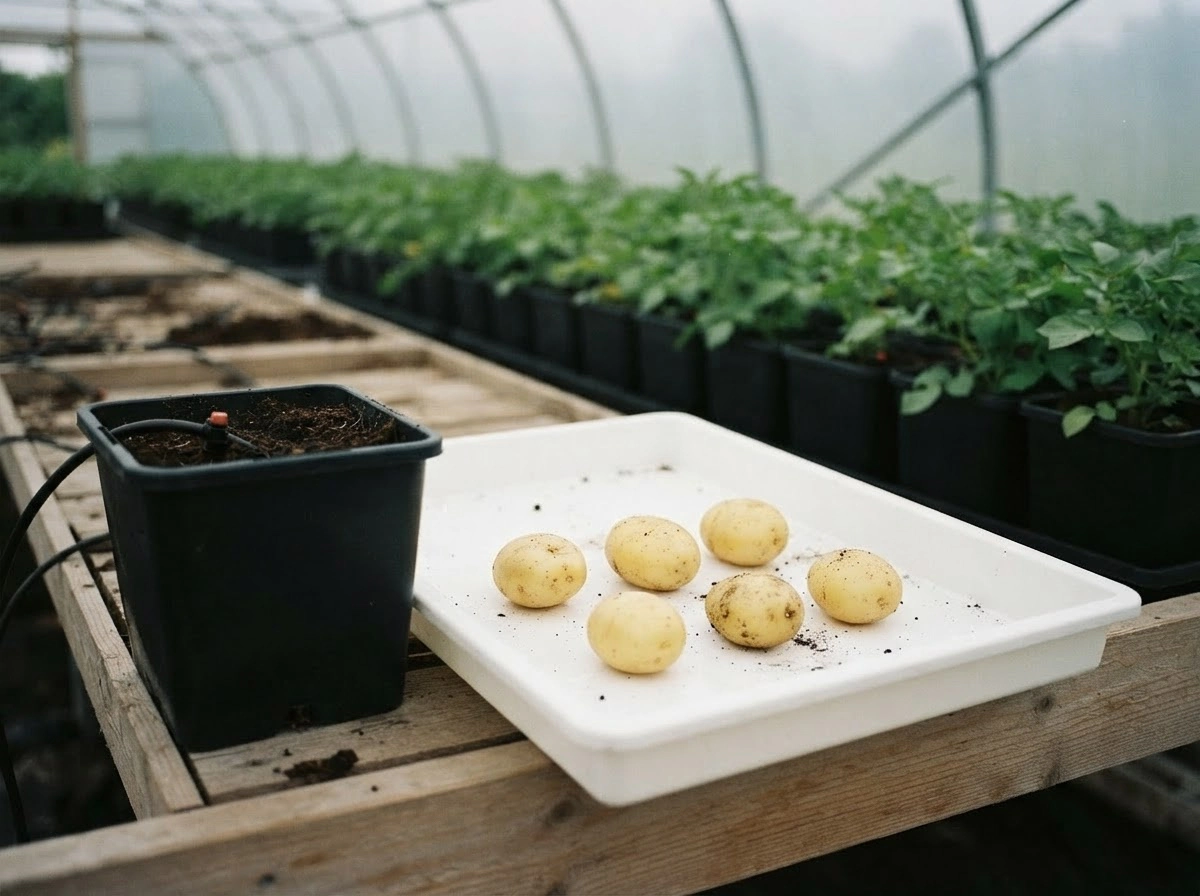
- Film greenhouse, 5 l pots with peat substrate, drip irrigation
- Region
- Sverdlovsk region
- Period
- 31 March — 1 July 2026 · harvest count on 30 June
- Variants
- 5 variants of 369 plants: control, BASK, two other biologicals and BASK combined with a biofungicide
- Control
- Standard greenhouse technology
- Trial
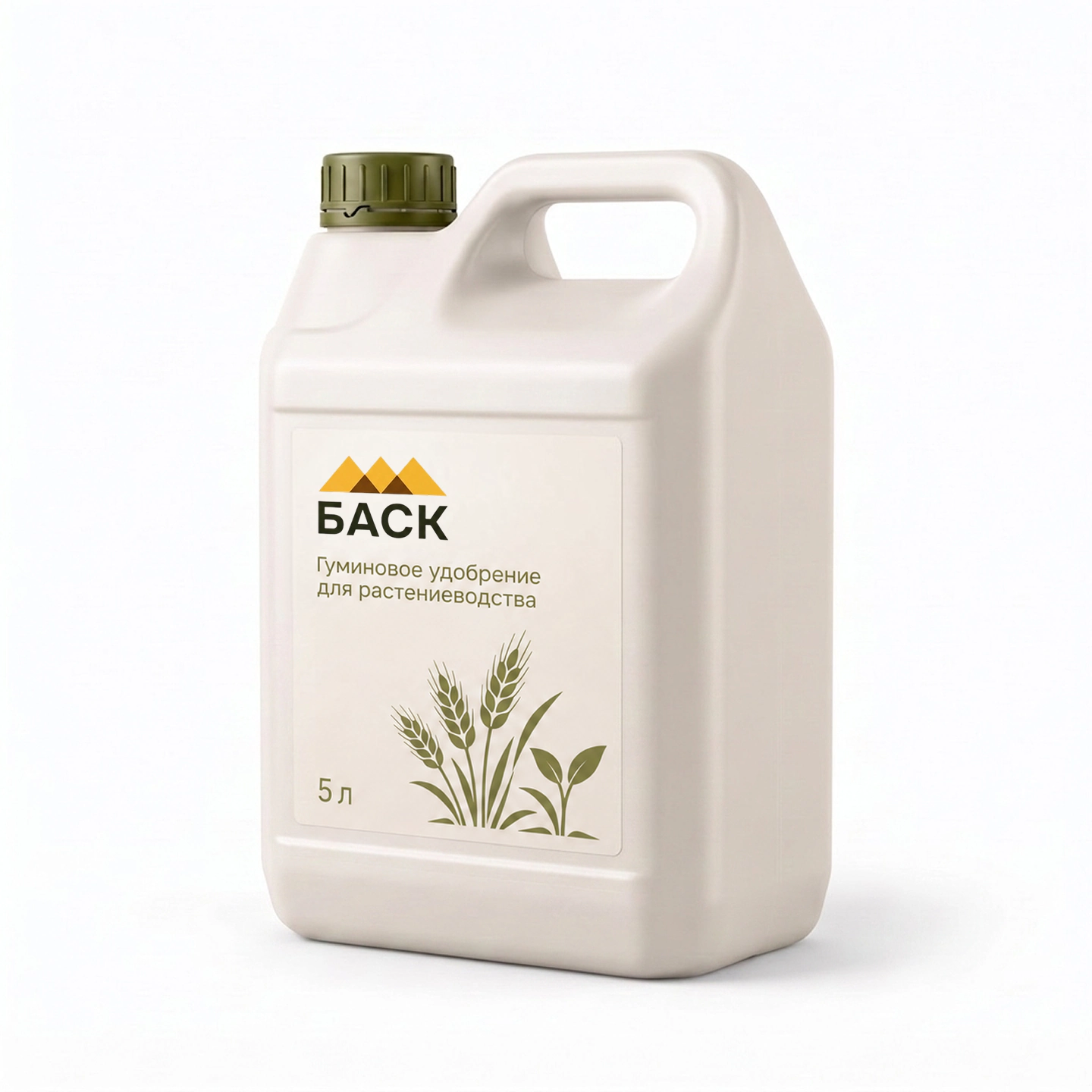
- BASK fertiliser — three treatments: in test tubes, of the root zone and foliar
- Conducted by
- Researchers of the farm's greenhouse complex, supported by BASK
- Document
- Trial report
Trial objective
To remove the infectious load from the substrate and check whether the fertiliser improves plant development, the harvest and the quality of mini-tubers.

Healthy substrate
Peat substrate for mini-tubers needs to be disinfected — throughout the whole pot.

Plant development
Check the survival rate, height and vegetative mass of the microplants.

Harvest and quality
Assess the weight, size fractions and share of standard mini-tubers.
How the trial was run
Five variants in one greenhouse, 3 blocks per variant. Only the treatment products differed.
Control
- Standard greenhouse technology
- Feeding and protection — according to the farm's scheme
- No BASK fertiliser
Trial
- Treatment of microplants in test tubes
- Root zone treatment at transplanting
- Foliar treatment in mid-May
- 31 March01
Treatment in test tubes
The microplants were watered with the fertiliser solution — 2–3 ml per tube.
- 2 April02
Transplanting
Planted into pots with peat and the root zone was treated right away.
- 14 May03
Foliar treatment
The third treatment — spraying the plants.
- 30 June04
Harvest count
Weight and size fractions of mini-tubers after harvesting on 26–29 June.
Results
Harvest count on 30 June, 369 plants in each variant. Comparison with the control.
Harvest weight, kg
+11%Control40.7With BASK45.1Share of standard tubers, %
+13 ppControl66With BASK79Average tuber weight, g
+47%Control15With BASK22Vegetative mass before harvest, kg
+12%Control4.69With BASK5.23
Why it worked
The fertiliser worked as a growth stimulant and held back the pathogenic microflora of the substrate.
- 01
A fast start
On day 19 after transplanting, the plants were taller than the control: 7.4 cm vs 6.3 cm.
- 02
More green mass
Before harvest, the above-ground mass was 12% higher than in the control.
- 03
Substrate protection
The humic complex held back pathogenic microflora and fungal diseases.
- 04
Larger tubers
Nutrition went into the tubers: an average weight of 22 g vs 15 g in the control.
Conclusions
Harvest weight 11% above the control — the best result among the five variants
79% standard tubers vs 66% in the control
Larger tubers — 22 g vs 15 g, although there are fewer per plant: 5.6 vs 7.5
Recommended for growing mini-tubers in protected ground
The result was obtained in a single trial in a film greenhouse on the VR 808 variety. We design a scheme for your farm separately.
Other cases
All cases
Let's test the result on your farm
We apply the solution to part of a field, herd or waste volume and compare it with a control. You decide on adoption after the result.
- 01
We discuss the task
We choose the indicators we will compare.
- 02
We set up the trial
A specialist visits you and sets aside trial and control groups — in the field, on the farm or at the site.
- 03
We take measurements
We record the indicators throughout the season or cycle.
- 04
We sum up
We hand over a report and an application scheme for your farm.
What you get
Results in your conditions
On your field, herd or site
A report compared with the control
Figures you can show to management
An application scheme for your farm
Rates, method and frequency of application
Or call us: +7 (343) 287-99-97 · we will agree on terms and timing on the first call