
- Livestock farming
- Broilers
- July–September 2026
Less feed per kilogram of gain in broilers
Two groups of 100 broilers were raised for 38 days under identical conditions. One received the BASK feed additive — we checked how feed consumption and weight gain would change.
- feed per 1 kg of gain
- 1.31
- vs 1.57 in the control
- feed consumption
- −8.7%
- 364 kg vs 396 kg per group
- group live weight
- +9.9%
- 276 kg vs 251 kg
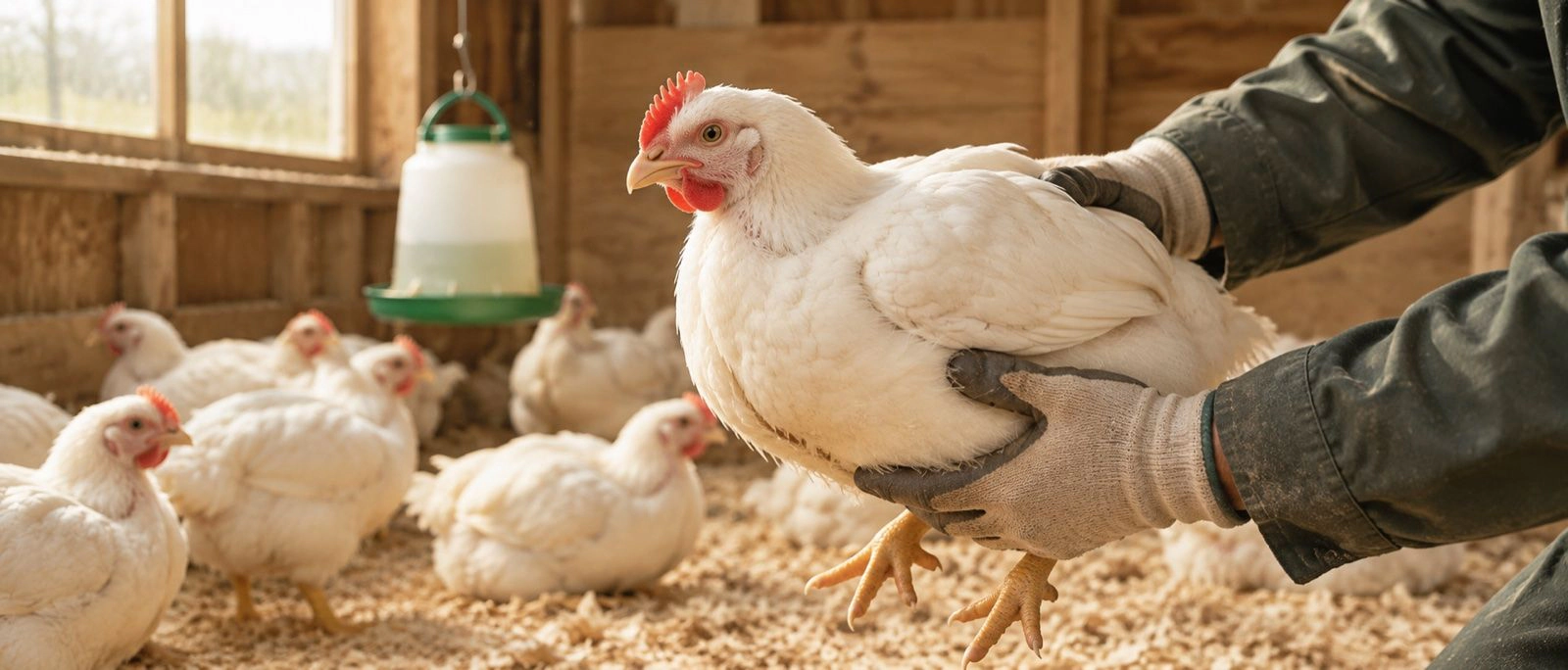
Trial passport
The conditions under which the result was obtained. The full report is in the documents below.
- Subject
- Broilers, Cobb 700 cross
- Flock
- 200 birds — two groups of 100
- Period
- 27 July — 3 September 2026 · 38 days
- Measurement
- Control weighing in the morning on day 39
- Medication
- Not used in either group
- Control
- Standard diet, no additive
- Trial
- The same diet + BASK feed additive in water and feed from the chicks' 2nd day of life
- Bedding
- In the trial group, treated once a week with BASK enzyme (1 part to 10 parts water)
- Document
- Trial report
Trial objective
To check whether the feed additive can reduce feed consumption, increase weight gain and improve meat characteristics.

Less feed
Reduce the amount of feed consumed without losing weight gain.

More gain
Increase the birds' live weight by the end of fattening.

Meat quality
Improve meat characteristics. Samples have been sent to the laboratory — data is pending.
How the trial was run
Two groups of 100 birds under identical conditions. They differed only in the feed additive in water and feed and in the enzyme treatment of the bedding.
Control
- Standard diet and watering
- 100 birds, Cobb 700 cross
- No feed additive
Trial
- The same diet and housing conditions
- 100 birds, Cobb 700 cross
- BASK additive in water and feed from day 2
- Day 201
Start
The additive was given in drinking water and in feed. The birds accepted it without rejection.
- Day 1102
Lower consumption
The trial group began to eat less: from day 11 to day 25 — 17% less feed on average.
- Day 2503
Feed change
The birds were switched to feed for adult poultry. Two days later the trial group returned to lower consumption — by 12–14%.
- Day 3904
Weighing
Control weighing of both groups in the morning. The meat was sent to the laboratory.
Results
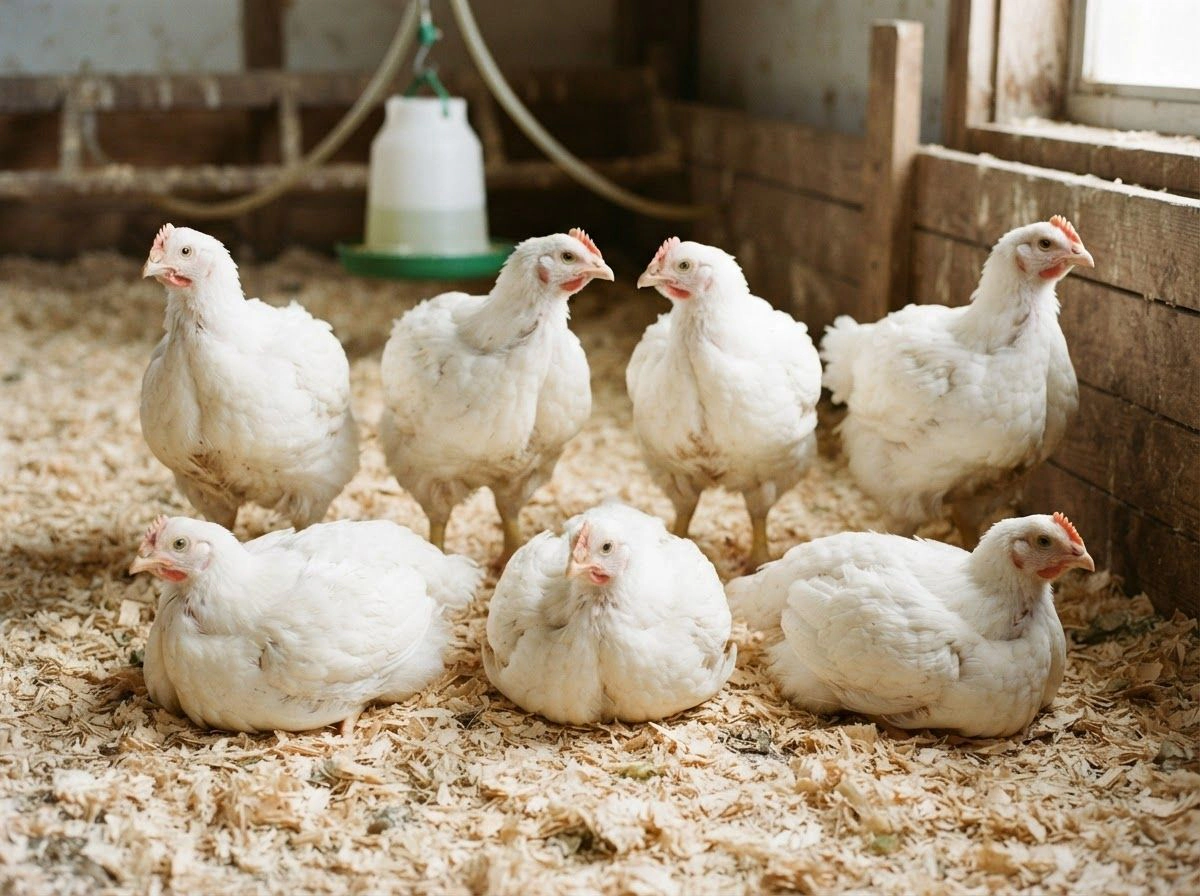
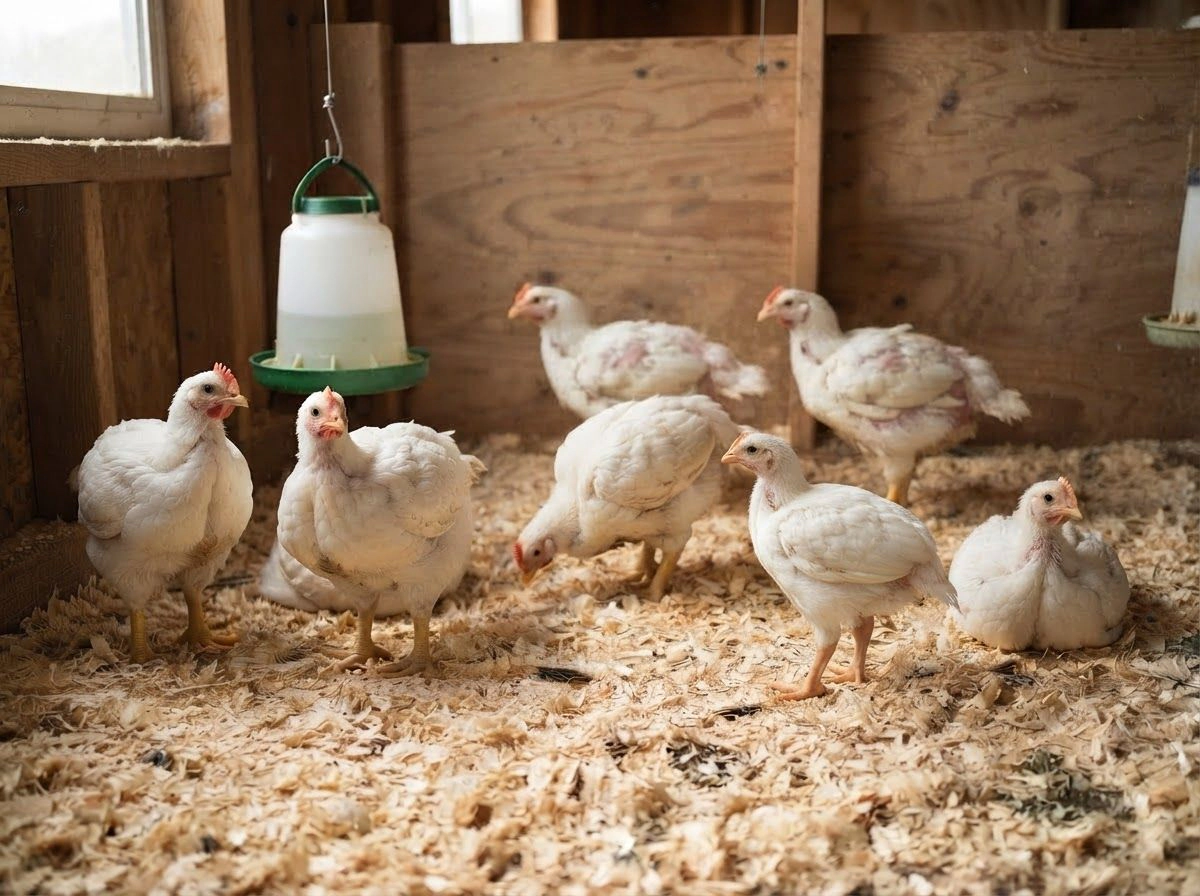
Control weighing on day 39. Both groups had 100 birds at the start.
Feed per 1 kg of gain (FCR)
−17%Control1.57With BASK1.31Feed consumption per group, kg
−8.7%Control396With BASK364Group live weight, kg
+9.9%Control251With BASK276Average bird weight, kg
+8.8%Control2.59With BASK2.82
Why it worked
The additive works through digestion: the birds get more out of the same feed.
- 01
The gut adapted
Over the first 8–10 days, digestion adjusts to absorb protein from feed more fully.
- 02
Feed is absorbed more fully
So the birds eat less while gaining more: 1.31 kg of feed per 1 kg of gain vs 1.57.
- 03
Less stress
The trial group is more active and calmer, with less pronounced stress — according to observations on days 18 and 30.
- 04
No rejection
The additive has no taste or smell — the birds drink and eat as usual.
Conclusions
1.31 kg of feed per 1 kg of gain instead of 1.57
The birds ate 8.7% less feed, while the group's live weight was 9.9% higher
The birds are more even in size, with dense plumage; mortality — 2 of 100 vs 3
Laboratory data on meat quality is pending
The result was obtained in a single trial on 200 birds and depends on the cross, diet and housing conditions. We design a scheme for your farm separately.
Other cases
All cases
Let's test the result on your farm
We apply the solution to part of a field, herd or waste volume and compare it with a control. You decide on adoption after the result.
- 01
We discuss the task
We choose the indicators we will compare.
- 02
We set up the trial
A specialist visits you and sets aside trial and control groups — in the field, on the farm or at the site.
- 03
We take measurements
We record the indicators throughout the season or cycle.
- 04
We sum up
We hand over a report and an application scheme for your farm.
What you get
Results in your conditions
On your field, herd or site
A report compared with the control
Figures you can show to management
An application scheme for your farm
Rates, method and frequency of application
Or call us: +7 (343) 287-99-97 · we will agree on terms and timing on the first call